The Emergence of Alberta’s Capital as Canada’s Premier Housing Sanctuary
Edmonton has emerged as an exceptionally attractive destination for skilled professionals and tradespeople seeking a high standard of living. While hyper-inflated markets in Vancouver and Toronto stress household budgets, the provincial capital remains a welcoming financial oasis.
An economic foundation anchored by public services, energy projects, and commercial development offers robust career opportunities. Local employers actively recruit global newcomers, making this municipal district a premier hub for integration.
Quick Overview of the Edmonton Newcomer Integration Timeline
Establishing a comfortable home in a new city requires executing a structured sequence of legal, financial, and residential tasks. This guide outlines a practical ninety-day settlement roadmap designed to help incoming families navigate local systems with confidence.
Prioritizing your initial administrative steps in a logical sequence ensures immediate compliance with provincial laws and prepares your household for growth. Organizing your relocation milestones early allows you to secure an affordable home and transition into the local workforce.
Strategic Geography: Selecting the Ideal Neighborhood by Lifestyle and Budget

Choosing the right geographic sector directly influences your daily commute, transit options, and family lifestyle. While standalone single-family homes face competitive bidding, the market for modern townhomes, apartments, and condominiums remains highly balanced and accessible.
Tenants can find excellent rental options close to major employment centers, university campuses, and expansive parklands. Newcomers should evaluate each community’s specific amenities and transit connections to ensure they align with immediate household needs.
Vibrant Urban Districts and Campus-Adjacent Communes
Students, academic faculty, and young professionals heavily concentrate in walkable central districts like Strathcona, Garneau, and McKernan. These vibrant neighborhoods offer immediate proximity to the University of Alberta campus and the active retail corridors of Whyte Avenue.
Wîhkwêntôwin, formerly Oliver, is the most densely populated neighborhood in Alberta. This central hub is a favorite for office workers due to its tree-lined streets and downtown access.
Suburban Family Communities and Culturally Diverse Hubs
Families seeking spacious townhomes and quiet residential environments often target southwest master-planned communities like Terwillegar, Windermere, and Creekwood Chappelle. These modern suburban areas feature newly constructed properties, legal basement suites, and excellent public schools like Donald Getty School.
For budget-conscious newcomers, Mill Woods is a highly practical and culturally diverse area. The neighborhood features affordable apartments connected directly to the downtown core by the recently completed Valley Line Southeast LRT network.
Financial Realities: Demystifying Rent Prices and Utility Bill Structures

Understanding localized cost structures is essential for maintaining a healthy household budget and building substantial savings during your transition. The city consistently ranks as Canada’s most affordable major metropolitan market, offering exceptional living space for a fraction of national average costs.
This favorable financial landscape allows newcomers to direct more of their hard-earned income toward long-term goals rather than housing expenses. Sponsoring agencies recommend reviewing detailed market reports to ensure your salary expectations match local living costs.
Typical Monthly Rental Outlays by Bedroom Configuration
According to comprehensive data compiled on the Coinquilino Average Rent in Edmonton 2026 database, rental rates remain highly accessible. A standard listed one-bedroom apartment in the city averages between twelve hundred and thirteen hundred and fifty dollars per month.
Standard unfurnished two-bedroom units average fifteen hundred and fifty to sixteen hundred dollars monthly. This represents a significant savings of nearly two hundred dollars compared to Calgary, protecting your financial resources.
The Mechanics of EPCOR Utility Billing and Seasonal Heat Factors
Renters must budget for monthly utility bills that combine electricity, natural gas, water, drainage, and waste management services. For a standard townhouse or detached home, combined monthly utility costs typically range from three hundred to five hundred dollars.
These monthly expenses are highly seasonal, with natural gas for winter furnace heating driving bills up and summer air conditioning occasionally increasing power bills. Tenants in modern condominiums often benefit because heating costs are frequently pre-included in the landlord’s monthly building association fees.
Navigating Alberta Tenant Protections and Security Deposit Regulations

Legal relationships between renters and property owners are strictly regulated under the comprehensive provincial Residential Tenancies Act. Understanding these statutory protections prevents administrative misunderstandings and ensures a secure, peaceful living experience throughout your lease term.
Tenants can easily review their legal privileges and landlord obligations on the official Prepare for Canada Best Edmonton Neighbourhoods for Newcomers informational portal. This knowledge serves as a valuable shield, guaranteeing fair treatment and protecting your household against unauthorized lease adjustments.
Maximum Deposit Caps and the Mandatory Trust Account Rules
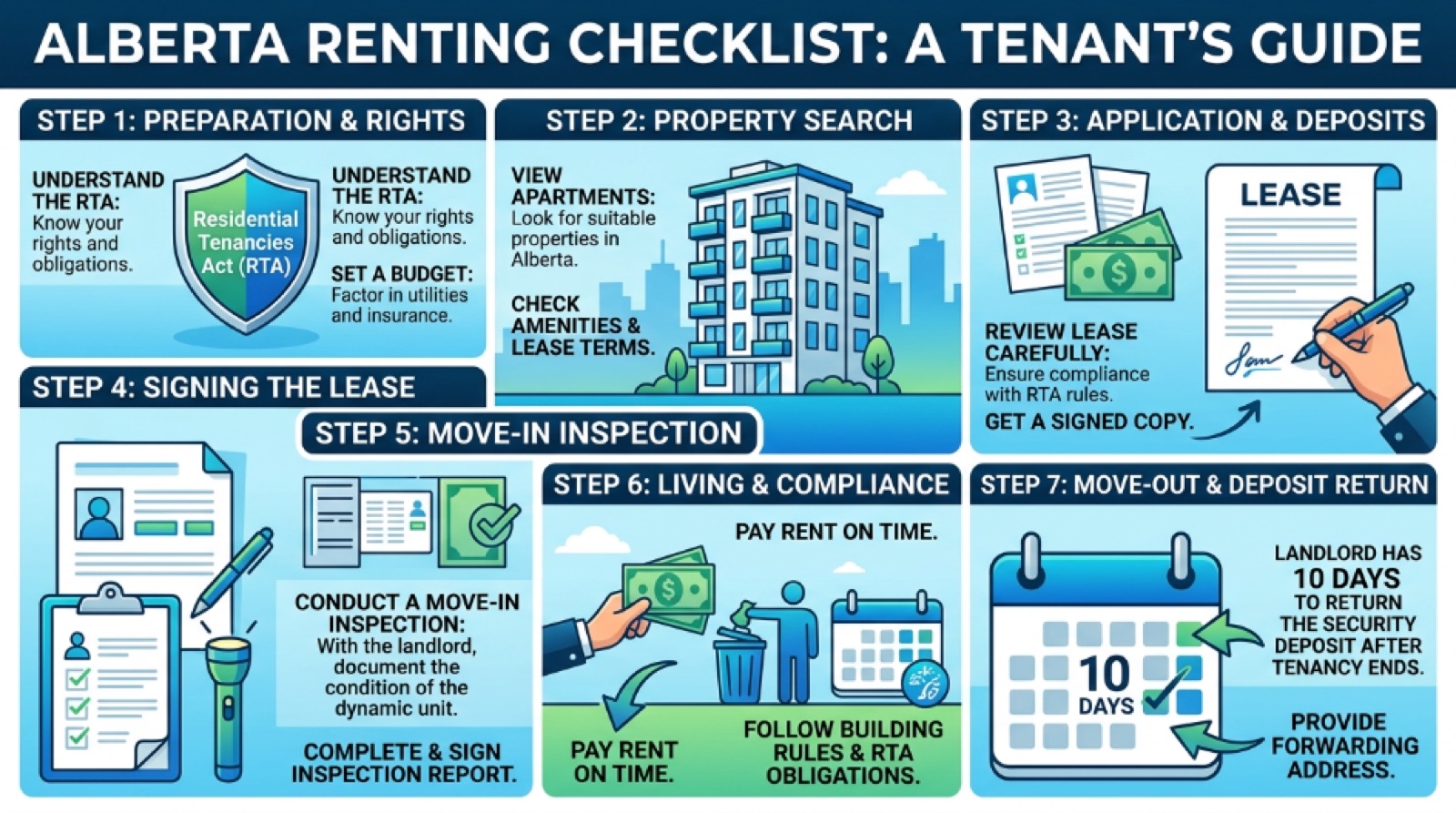
Under provincial law, a landlord is strictly prohibited from collecting a security deposit that exceeds the equivalent of exactly one month’s rent. Any additional charges, such as refundable pet fees or key deposits, must be included within this single, legally mandated maximum cap.
The property owner must hold this deposit in a separate, interest-bearing trust account. Landlords are legally required to manage these accounts in full compliance with provincial justice standards.
Mandatory Move-In Inspections and the Deposit Return Timeline
Landlords cannot legally make financial deductions for physical property damage unless formal move-in and move-out inspection reports were completed and signed. These mandatory inspections must be conducted jointly by the landlord and tenant to establish an undisputed record of the unit’s condition.
The landlord has exactly ten days from the end of the tenancy to return the security deposit. If any deductions are made, the property owner must provide a detailed, itemized statement of account within this timeframe.
A Tactical Ninety-Day Settlement Checklist for Newcomer Success
Successfully integrating into the local community requires executing several critical administrative tasks during your initial three months of residency. Budgeting your time to complete these milestones prevents unnecessary stress and lays a solid foundation for your family’s future.
Candidates can find localized resources and market transition assistance detailed on the comprehensive RentYEG Cost of Renting in Edmonton: 2026 Market Guide platform. Following a structured schedule ensures that your household remains fully compliant with both federal and provincial regulations.
The First 30 Days: Securing Core Federal and Provincial Credentials
During your first week in the province, you must visit a local Service Canada center to obtain your Social Insurance Number. This critical nine-digit credential is legally required to establish a bank account and secure lawful employment with Canadian businesses.
You should apply immediately for the Alberta Health Care Insurance Plan to secure provincial medical coverage. This program underwrites essential doctor visits and hospital services, providing vital protection for your family.
The Next 60 Days: Establishing Financial Infrastructure and Transport Logistics
Once credentials are secure, you should open a Canadian bank account and register your address with utility providers. Sponsoring agencies recommend selecting fixed-rate electricity and natural gas contracts to protect your household from winter price spikes.
Newcomers must also exchange their international driver’s licenses for a valid Alberta license within ninety days of arrival. This mandatory transaction is completed at any licensed registry agent office and requires providing proof of legal residency and insurance.
Essential Practical Inquiries for Newcomers Settling in Edmonton
Is there a legal cap on annual rent increases for tenants in Alberta?
Unlike some neighboring provinces, Alberta does not enforce a statutory percentage cap on annual rent increases for residential leases. However, a landlord can legally raise the rent only once in a twelve-month period and must provide proper written notice.
For a standard periodic or month-to-month tenancy, the property owner must deliver a signed, written notice of increase at least three full tenancy months in advance. This regulatory framework prevents sudden, unexpected cost adjustments and gives tenants ample time to budget.
What is the legally prescribed interest rate for security deposits in 2026?
The government-prescribed minimum annual interest rate that landlords must pay on tenant security deposits for 2026 is exactly zero percent. This official rate is calculated annually using a statutory formula tied to cashable one-year Guaranteed Investment Certificates.
Candidates can review the historical rate progression and use the official calculation tools on the Government of Alberta Annual Security Deposit Interest Rate portal. Any interest accumulated from prior years when the rate exceeded zero percent must still be paid to the tenant annually.
Are separate non-refundable pet fees or key deposits legal in the province?
Landlords can legally charge non-refundable pet fees or key charges, but these separate fees must be explicitly outlined in the written lease agreement. However, any refundable fees or deposits are classified by law as security deposits and count toward the maximum cap of one month’s rent.
Property owners cannot legally charge a separate ‘damage deposit’ and an additional ‘pet deposit’ if the combined total exceeds one month’s rent. Newcomers should examine their lease agreements carefully to ensure that all charges comply fully with these regulations.
How is the Edmonton public transit network structured for commuter access?
The municipal transit network is designed around an integrated system of buses and light rail transit lines that connect diverse neighborhoods. The Capital Line LRT runs north-south through the city center, connecting major residential hubs and university campuses.
The newly completed Valley Line Southeast LRT connects Mill Woods directly to downtown, providing rapid, low-carbon commuter access for thousands of residents. Sponsoring agencies recommend selecting rental units close to these transit corridors to minimize daily commuting expenses.
Where can a tenant file a legal dispute if they cannot reach an agreement?
If a housing dispute cannot be resolved directly, both tenants and landlords can file an application with the Residential Tenancy Dispute Resolution Service. This specialized quasi-judicial tribunal provides a fast, low-cost alternative to court proceedings for resolving residential lease conflicts.
Adjudicators hear evidence and issue legally binding decisions regarding security deposit returns, unpaid rent, and lease terminations. Newcomers can submit applications online or visit local registry offices to initiate this protective dispute resolution process.
Laying a Secure Foundation for Your Professional Future in Alberta’s Capital
Relocating to the vibrant city of Edmonton represents an exceptional opportunity to build long-term financial security and advance your professional career. The municipal district offers an unrivaled combination of modern infrastructure, a stable job market, and outstanding housing affordability.
Understanding your statutory rights under provincial law and following a structured ninety-day settlement roadmap allows you to transition with ease. Take proactive steps today to explore diverse neighborhoods, prepare credentials, and establish a successful home in Alberta’s capital.