The Structural Shift in Canada’s Immigration Strategy for Trade Professionals
Canada is experiencing a severe structural deficit of certified tradespeople due to a combination of rapid urban development and an aging domestic workforce. Sponsoring departments are actively prioritizing skilled international workers to ensure that vital infrastructure and residential building projects remain on schedule.
Immigration, Refugees and Citizenship Canada manages this recruitment through specialized economic streams within the centralized Express Entry selection framework. Qualified tradespeople from across the globe can leverage these pathways to secure stable, high-paying jobs while establishing permanent residency in Canada.
Quick Overview of the Canadian Skilled Trades Integration Framework

The Canadian Skilled Trades Integration Framework provides an official pathway that aligns international vocational skills with provincial safety and building codes. This cooperative system coordinates federal immigration intakes with territorial licensing boards to accelerate the on-site deployment of qualified personnel.
Applicants must demonstrate specialized trade experience and satisfy mandatory regulatory assessments to secure their federal invitations. Sponsoring provinces assist newly arrived workers by providing specialized bridging programs and immediate access to local union networks.
Essential Entry Criteria for the Federal Skilled Trades Program
The Federal Skilled Trades Program is a dedicated pathway designed specifically for experienced vocational professionals who want to immigrate to Canada. Sponsoring agencies evaluate applicants based on their practical skills, language proficiency, and licensing credentials rather than high academic qualifications.
Candidates must meet all minimum criteria established by the Department of Immigration to enter the Express Entry pool successfully. Sponsoring employers must also verify that their job offers comply with federal labor standards before a visa is issued.
Statutory Work Experience and Lower Language Thresholds
Applicants must possess at least two years of full-time work experience in an eligible skilled trade within the five years preceding their application. This mandatory experience is calculated as at least three thousand one hundred and twenty hours of paid employment in your specific trade as outlined on the Express Entry: Federal Skilled Trades Program Requirements portal.
Trade professionals also benefit from significantly lower language requirements compared to academic immigration streams. Sponsoring rules require candidates to score at least Canadian Language Benchmark five for speaking and listening, and Canadian Language Benchmark four for reading and writing.
Job Offers and Provincial Certificates of Qualification
A qualifying candidate must possess either a valid offer of full-time employment for a duration of at least twelve months or an official Certificate of Qualification. This specialized employment offer can be split between up to two Canadian employers to satisfy the program guidelines.
Securing a Certificate of Qualification requires passing a rigorous technical examination administered by a provincial or territorial trade authority. This credential proves to Canadian employers that you possess the practical skills required to work safely under local regulations.
Strategic Advantages of Express Entry Category-Based Draws
The federal government introduced category-based selection rounds within the Express Entry framework to address acute labor deficits directly. These specialized draws allow immigration officers to invite trade professionals based on their specific work experience rather than overall ranking scores.
This targeted selection mechanism ensures that experienced electricians, welders, and carpenters receive priority processing. Candidates who qualify under these occupational categories receive their permanent residency invitations much faster than general applicants.
Lower CRS Cutoffs and Recent Ministerial Draw Metrics
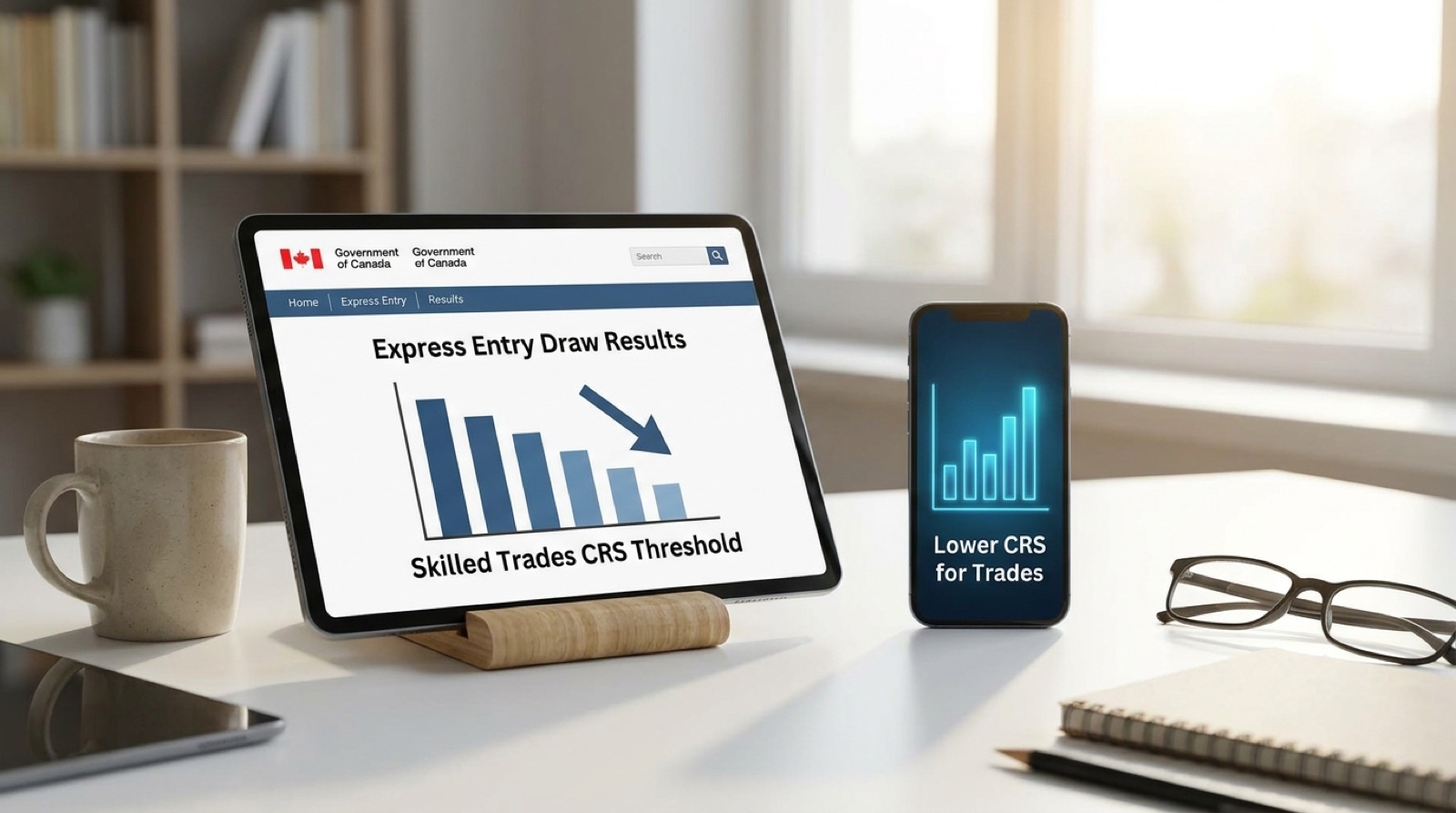
Targeted draws for skilled tradespeople frequently cut off at much lower Comprehensive Ranking System scores than standard all-program invitation rounds. The historic Trades draw conducted on April second invited three thousand qualified candidates with a minimum score of just four hundred and seventy-seven.
These lower score thresholds make the trades category highly accessible for experienced international professionals who lack university degrees. Sponsoring officials plan to maintain these priority rounds throughout the calendar year as detailed on the IRCC Category-Based Selection: Trade Occupations Guideline portal.
The Pivotal Twelve-Month Work Experience Rule Change in 2026
The Department of Immigration enacted a significant structural policy update regarding category-based draw eligibility at the beginning of the year. Candidates must now demonstrate at least twelve months of cumulative work experience in an eligible occupation within the preceding three years.
This updated work experience rule applies to all foreign and domestic tradespeople seeking selection under targeted occupational rounds. Sponsoring attorneys advise applicants to verify their historical employment records carefully to ensure full compliance before submitting their profiles.
Technical Classifications Under the National Occupational Classification System

Canada utilizes the National Occupational Classification system to categorize and evaluate all jobs in the domestic labor market. Sponsoring streams rely on these standardized codes to verify that an applicant’s work experience aligns with targeted trade deficits as indexed on the NOC 2021 National Occupational Database portal.
Applicants must identify their correct occupational classification code during the initial profile creation stage. Sponsoring officers will verify that your previous daily responsibilities match the main duties outlined in the official federal database.
Electricians, Welders, and Carpenters NOC Codes and Main Duties
Construction electricians are classified under NOC code seventy-two thousand two hundred, while industrial electricians fall under seventy-two thousand two hundred and one. Sponsoring employers require these professionals to assemble, install, test, and repair electrical wiring and control devices safely.
Welders are categorized under NOC code seventy-two thousand one hundred and six, and carpenters occupy NOC code seventy-two thousand three hundred and ten. These specialists must read blueprints, operate specialized welding machinery, and construct structural frameworks according to local building regulations as detailed on the Express Entry Trades Category NOC Index & Fee Portal directory.
Step-by-Step Profile Creation and Government Processing Fees
The application process begins by creating an active online profile within the centralized Express Entry portal. Sponsoring systems will automatically calculate your Comprehensive Ranking System score based on your age, trade experience, and language test results.
The principal applicant must pay a government processing fee of one thousand five hundred and twenty-five dollars, which includes the mandatory Right of Permanent Residence Fee. Sponsoring a spouse carries an identical fee of one thousand five hundred and twenty-five dollars, and dependent children require two hundred and sixty dollars.
Essential Consular and Regulatory Inquiries for Relocation Seekers
Is an Educational Credential Assessment required to enter the Express Entry pool under the trades program?
An Educational Credential Assessment is not mandatory for entering the Express Entry pool under the Federal Skilled Trades Program. Sponsoring attorneys recommend obtaining this assessment because it awards valuable additional Comprehensive Ranking System points for your academic history.
Are trade applicants required to prove they possess sufficient settlement funds to relocate to Canada?
Yes, applicants must prove they possess sufficient settlement funds to support themselves and their families upon arrival. Sponsoring rules waive this financial requirement if the candidate possesses a valid, LMIA-supported job offer and is legally working in Canada.
Can an applicant apply to the program with work experience gained through self-employment?
Self-employed work experience is legally eligible for the Federal Skilled Trades Program provided the candidate can supply verifiable documentation. Sponsoring officers require official tax assessments, client contracts, and detailed reference letters to prove the validity of self-employed trade hours.
What happens if a candidate receives an invitation but cannot prove the qualifications claimed in their profile?
Section eleven point two of the Immigration and Refugee Protection Act allows officers to refuse a visa if qualifications are unverified. Sponsoring agencies emphasize that any mismatch between your profile claims and your physical documents will lead to immediate rejection.
How long does the federal government take to process permanent residency files under the trades stream?
The average processing time for complete permanent residency applications submitted through the Express Entry system is approximately six months. Sponsoring departments maintain this expedited processing timeline to ensure that skilled trade workers can integrate into the workforce quickly.
Laying a Permanent Foundation for Your Professional Career in Canada
Securing permanent residency through the Federal Skilled Trades Program represents an exceptionally realistic and lucrative milestone for international trade specialists. Sponsoring provinces provide high-paying career opportunities, comprehensive healthcare, and robust worker protections to ensure your professional integration.
Preparing your licensing documents and aligning your profile with targeted draw categories will establish a secure foundation for your move. Take proactive steps today to verify your trade classifications and begin your structured journey toward your Canadian permanent residency goals.